
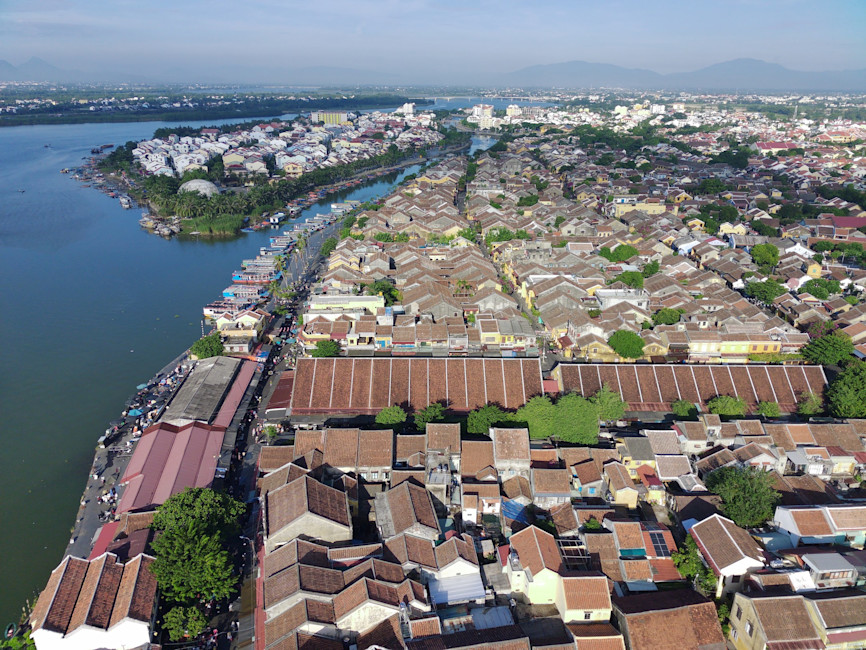
Hoi An is a small city, only about 61.7 km², but it offers diverse accommodation areas to suit every type of traveler. Here are the 7 main areas to consider:
1. Ancient Town (City Center)
Hoi An Ancient Town - once a bustling port in the 16th century, is now a UNESCO World Heritage site (since 1999) and the beating heart of the city. With an area of about 2 km², it’s famous for mossy-roofed houses, colorful lanterns, peaceful alleys, and delicious local food. Staying here puts you right in the middle of it all.
Location: Within a 2 km radius of the Japanese Covered Bridge.
Best for: First-time visitors who want to soak up the atmosphere of the lantern town, night market, cafés, and restaurants.
Pros: Walkable, vibrant nightlife.
Cons: More expensive, can be noisy at night.

2. Rice Field Area (An My Village)
About 3 km from the Old Town, An My Village is a traditional countryside setting, famous for its peaceful rice paddies. On Google Maps, the fields form a heart shape, a symbol of its charm.
Location: Around An My rice fields, 3 km from the center.
Best for: Nature lovers, cyclists, and those seeking peace and quiet.
Pros: Perfect for relaxation, stunning views during rice season.
Cons: Further from the beach & Old Town, need transport; scenery changes with the season.

3. Tra Que Vegetable Village
Recognized by the UN World Tourism Organization in 2004 as one of the Best Tourism Villages in the World, Tra Que has been farming organic vegetables since the 16th century. Surrounded by rivers and lagoons, the village is a green, peaceful escape.
Location: 4 - 5 km northeast of the Old Town.
Best for: Travelers interested in eco-tourism, farming experiences, and cooking classes.
Pros: Fresh air, green homestays, immersive cultural experiences.
Cons: Quiet at night, limited entertainment.

One of many interesting cooking classes in Tra Que Vegetable Village
4. Coconut Palm Area (Cam Thanh)
Forbes magazine has just announced the list of the 50 most beautiful villages in the world in 2025, with Cẩm Thanh (Da Nang) ranked 20th. Known as the “green lung” of Hoi An, the American magazine described it as a village “surrounded by waterways and endless coconut forests,” and it is the only representative of Vietnam to make the list. Ride a bicycle through narrow alleys, past flower-filled gardens, and out into lush rice paddies.
Location: Within 1.2 km of the Coconut Palm Monument, about 5–6 km from the Old Town.
Best for: Families and couples who want an eco-resort stay, or to try the famous basket boat tours.
Pros: River scenery, many eco-resorts.
Cons: Fewer urban conveniences, very quiet at night.

5. Riverside Area (Cam Nam, Thu Bon River)
Across the bridge from the Old Town lies Cam Nam, a peaceful village-like neighborhood. It’s known for its bamboo groves, gardens, and riverside sunsets. You’ll find fresh corn, family-run eateries, and a slower pace of life here.
Location: 2–3 km from the Old Town.
Best for: Travelers who love riverside views and romantic sunsets.
Pros: Beautiful sunsets, luxury riverside villas.
Cons: Limited nearby shops and restaurants.

6. Local Area (Tan An Lake & Tan An Market)
Once a fishing village and now a lively residential district, Tan An offers a mix of traditional houses and new urban areas. This is where many local families live.
Location: Around Tan An Lake and Tan An Market.
Best for: Visitors who want an authentic local experience and affordable stays.
Pros: Budget-friendly, many local eateries, fewer tourists.
Cons: Not close to the beach, less lively atmosphere.
7. Beach Area (Ha My – An Bang – Tan Thanh – Cua Dai)
Stretching more than 7 km, Hoi An’s beaches are among the most beautiful in Asia. Ha My, Cua Dai, and An Bang beaches have all been recognized by international travel magazines. With soft sand, clear waters, and vibrant beach culture, this is perfect for sun-seekers.
Location: Along the coast, from Ha My to Cua Dai.
Best for: Beach lovers, resort vacationers, and younger travelers wanting homestays near bars and restaurants.
Pros: Stunning beaches, great for both relaxation and activities.
Cons: Very hot at midday in summer; nightlife mostly limited to bars and resorts.

Additional Tips
Pricing: Ancient Town & beachfront areas are more expensive; countryside & local areas are budget-friendly.
Getting around: Hoi An is small. Renting a motorbike or bicycle makes it easy to reach the beach, rice fields, or Old Town in 10–15 minutes.
Best seasons:
Peak season (Feb–Apr): Best weather, many festivals.
Summer (May–Aug): Best beach season.
Rainy season (Sep–Dec): On September, the weather is quite cool and not much rain. From October to December, sometimes flooding in the Old Town, but fewer crowds and lower prices.
Each area in Hoi An has its own charm and trade-offs. Whether you prefer lively streets, quiet rice paddies, or the sound of the waves, the choice depends on your style. Hopefully this guide helps you picture each area more clearly and decide where to stay. In upcoming posts, I’ll dive deeper into each neighborhood with detailed accommodation recommendations.
Trace Travel Team

